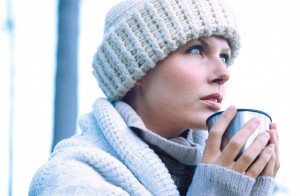
 The thickness of the skin, loneliness or tiredness are some of the reasons that make people cold.
In temperatures below zero, it is rare for those who do not feel cold. But even in these situations there are people who seem to have a really bad time… and some who seem not to be affected by low temperatures. Why are some people colder than others?
Cold is a sensation, a perception of our brain that occurs in the area of the hypothalamus, where our body temperature is regulated. Its main function is none other than to control that our temperature does not drop (or rise) abruptly or that we lose energy, as explained in ‘ScienceLine’.
In other words, if it is cold, the body’s own reaction is to lower the temperature of our skin so that, in this way, our heat does not ‘escape’. However, when the feeling of cold is not related to low temperatures outside, it can mean something more.
The differences between some people and others in terms of cold can have several causes, and one of them is the “thickness” of the skin, which protects and insulates the organs. In other words, thin people are generally colder because their skin is thinner and, therefore, less protective: just as it is not the same to wrap up warm with a sweater as with a cotton T-shirt.
Also, as the cold is a sensation of our brain, it can sometimes deceive us. For example, some research has found that those who feel lonely tend to perceive spaces as colder, and that seeing a person shivering exerts a kind of ‘contagion’ and will make us feel colder.
Another reason for feeling cold can be tiredness or exhaustion, something for which Onmeda.es assure that we should not worry about anything other than resting so that the cold passes. On other occasions, it can be a symptom of an illness, from flu or colds (it will disappear along with mucus and discomfort) to more severe infections or circulatory problems, cases in which it is best to go to the doctor.
How to stop being a cold-haired person?
In most cases, and as long as the cold condition does not imply a serious illness, you can stop being cold by changing your lifestyle: eating better, exercising and reducing daily stress.
For example, a little exercise will activate the metabolism and lead to the movement of the muscles. These, while moving, produce heat. The most practical example is found in a football match: while the players are wearing simple shirts, the spectators are wearing several layers of warmth.
The liver also has a lot to say when it comes to cold: ScienceLine explains that 20 percent of our body heat is produced by this organ, so experts advise “treating it well” and not abusing alcohol.
There is also a basic way to avoid the cold: wrap up warm and drink hot food and drinks, as well as increase the temperature of the environment and take a good shower. You may not avoid the “cold person” condition, but you will avoid that feeling, at least momentarily.
Source: La Opinión de Málaga