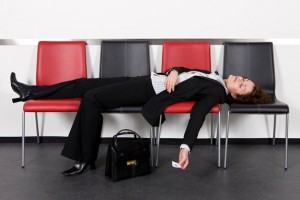
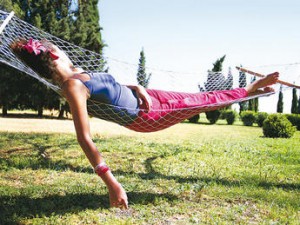
 Sleeping at night during summer is sometimes an impossible task. But taking a nap, now that you have more time, can help you rest. Important neurophysiologists maintain that napping is beneficial and a biological necessity, as long as it’s not too long. Some claim that the body has a natural disposition to sleep twice daily: a midday nap and several hours at night. Even NASA, after a study, says that a 40-minute nap allows one to return to a state of maximum alertness and attention.
A short nap boosts morale, improves attention, productivity, and worker safety. Among nap enthusiasts: Leonardo da Vinci, Churchill, Clinton, and Sharon Stone.
How to Cool Down
There are a series of traditional tricks to cool off a bit. You can, for example, put your wrists under cold running water. This cools the blood that passes superficially through the area and this cooling circulates throughout the body. You can also use a fan and place a container with ice in front of it, so that the air that reaches you is cooled.
If the heat is excessive, take a lukewarm shower and then don’t dry yourself completely; wait to dry naturally in the environment.
Some advise wetting a pair of socks, wringing them out well, and putting them on while they’re still damp,
but not wet.
Another remedy is to keep a glass of cold water at hand to drink from time to time and, in the process, stay hydrated.
You can also create some airflow in the house by opening windows in different rooms and doors.
Remember
Avoid heavy, spicy, or highly seasoned dinners. Counting sheep is an erroneous measure because one concentrates and delays sleep. It’s not true that plants oxygenate the bedroom; they only do so during the day, but not at night, since at night plants do precisely the opposite.
Good Things Come in Small Packages
What all specialists agree on is that napping is beneficial if it’s brief. Sleeping more than 30 or 40 minutes would have some disadvantages, because it would allow the body to reach the deeper phases of sleep and waking up would be uncomfortable; you lose time perception and may even get a headache. Centuries ago, monks, who woke up at six in the morning, after lunch at twelve, often dozed off during meditation. That’s the origin of the siesta. It should be done after lunch, in the early afternoon, in a quiet place and with the assurance that you will wake up in half an hour. Dr. Estivill, one of the greatest authorities on sleep problems, maintains that the ideal would be to sleep between
ten and twenty minutes.
While we sleep, we turn in bed approximately every hour and a half. If we go to bed early, we move less than if we go to bed late. If dinner is copious, there’s more movement. And if one goes to bed after watching a violent movie, also.
Some Advice
•Drink plenty even if you’re not thirsty.
•Avoid heavy meals. Eat fruits and vegetables to replenish mineral salts.
•During the day, keep blinds down and even close windows. At night, do the opposite.
•Don’t leave children or the elderly inside vehicles.
•As for exercise, do it early in the morning or late in the evening.
•Protect yourself from the sun
with a cap and wear light clothing. Use loose-fitting clothes and comfortable shoes.
Those who suffer from hypertension should be very careful. Especially if they are elderly – nearly 70% of those over 60 are hypertensive. The elderly have a deteriorated sweating regulation mechanism. If they are also hypertensive, it’s very likely that they present cardiac, renal, and vascular problems, which increases the difficulty in getting rid of heat. Hypertensive individuals should drink fluids frequently when it’s very hot, because they lose a lot of water through sweating. And they should avoid alcohol, because it acts on the antidiuretic hormone and increases urination.
Source: Diezminutos Salud