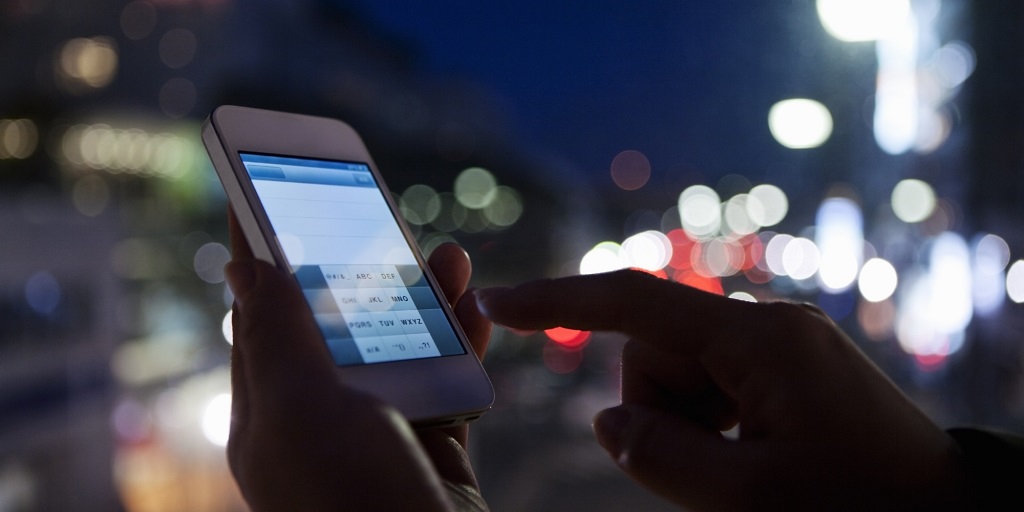
 Okay, we know that looking at the screen before going to bed is bad for sleeping. But it turns out that using your smartphone at night also leaves you exhausted in the morning, reducing your ability to concentrate and your dedication to work.
The report, published in the weekly Organizational Behavior and Human Decision Processes, has two parts. For the first, 82 intermediate positions answered several questionnaires over two weeks. The questionnaires asked about their work use of the smartphone, the quality and quantity of their sleep, dedication to work and feeling of exhaustion. The questions were distributed at six in the morning (to determine the use of the smartphone during the previous night, sleep and tiredness in the morning), and at four in the afternoon (to estimate the dedication to work that day).
The researchers found that using the smartphone after nine o’clock at night was associated with fewer hours of sleep that night. That lower amount of sleep was in turn related to morning tiredness the next day, and that exhaustion to less work that day.
The researchers concluded, through a mathematical formula, which in reverse did not work, that less dedication in the office did not equate to greater use of the smartphone at night.
For the second part of the study, the researchers asked 161 employees working in a wide range of activities (from dentists to accountants), 136 of whom provided detailed answers. Participants in this part of the report received the questionnaires at the same times as in the first part. But this time, the authors of the study also studied the use of other devices, such as computers, laptops, tablets and television, to see how they affect sleep, morning exhaustion and work dedication.
The researchers discovered similar results to those of the first part of the study, in which the greater the nighttime use of the smartphone, the greater the fatigue in the morning, which decreased the dedication in the office. But smartphones affect this channel more than using a laptop, a tablet or watching television.
“Smartphones seem perfectly designed to disrupt sleep,” says Russell Johnson, a teaching assistant at Michigan State University and one of the study’s authors. “They keep us mentally active well into the night, making it difficult to disconnect from work to relax and fall asleep.”
Exposure to excessive light at night could be doing more than damaging our ability to work the next day, it can increase the risk of diseases, such as cancer, as well as affecting sleep.
For this reason, at Mi Colchón we recommend not using mobile devices after dinner and in this way we go to sleep more disconnected and relaxed.
If it is an effort for you to fall asleep, it may be because you are not resting on a suitable mattress. Consult with our sleep experts and take advantage of our exclusive offers.
Source: Huffington Post