 If the answer is anything other than ‘refreshed’, ‘rested’, or ‘good’, you probably need to review your sleeping habits. At least that’s what Dr. Michael Decker, a professor at Georgia State University (USA) and spokesperson for the American Academy of Sleep Medicine, says. ‘We should wake up feeling good. If not, something is happening during the night that’s ruining our sleep, and we’re not aware of it.’
Let’s look at five circumstances in our daily lives that can make us sleep poorly:
1. Loneliness.
People who perceive themselves as lonely have more fragmented sleep, according to the findings of a study conducted with 95 adults in South Dakota. This affects sleep quality, although not the quantity of hours we sleep. It doesn’t matter if you’re young or old, if you live in the countryside or in the city; feeling part of a community that provides a sense of security makes us have a deeper sleep.
2. Sleeping with a pet.
Scientists claim that pet owners interrupt their sleep almost every night for 20 minutes. Additionally, 21% of them acknowledge that their dogs snore, as reported by 7% of those who had a cat at home. In general, having a pet in the bedroom involves noises that interrupt sleep.
3. Shift work.
It’s a classic that causes fatigue and interrupted sleep that oscillates between insomnia and continuous drowsiness. The main problem is the alteration of circadian rhythms and our body’s sensitivity to light. Natural light and darkness are key to adjusting our sleep and wake cycles. It’s a concept similar to the jet lag suffered after a long trip. Researchers recommend that those who work shifts and have to sleep during the day simulate dark conditions to help the body sleep.
4. Room temperature.
At night, body temperature starts to drop, and that’s a signal that it’s time to go to bed. Drinking a glass of warm milk helps to fall asleep precisely because a warm liquid raises the temperature and facilitates its immediate drop. Almost at dawn, the body begins to gradually raise the temperature until we wake up. If the room is too cold or hot – the ideal temperature is 21 degrees – this temperature cycle is altered and so is the quality of sleep.
5. A mattress in poor condition
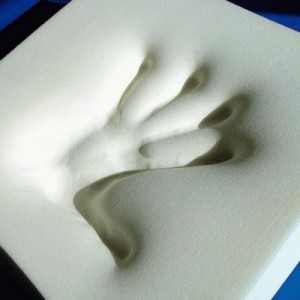
Over the years, our body experiences metabolic or physical changes (weight loss or gain, growth, pregnancy, bone or muscle diseases, injuries…), and the mattress that fit us perfectly a few years ago may not be the healthiest after these circumstances, because our physical characteristics and conditions have changed. A mattress over 10 years old ceases to be completely healthy and becomes harmful, regardless of the use it has been given. This is explained by Asocama (Spanish Bed Association) after several clinical studies.