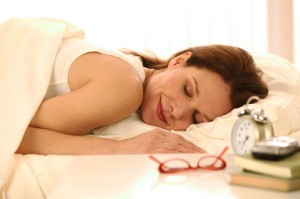
Warm, hydrate, stretch. If a person thinks about three important and essential aspects before, during and after doing sport, they are probably the first ones that come to mind. However, there is one crucial one that is the great forgotten: night’s rest, one of the basic pillars to achieve athletic recovery.
But why is it so important to get a good night’s sleep? The simplest answer is to have an optimal sport. “Sleep is involved in cognitive functions, influences physical performance, motivation, the athlete’s mood, their ability to learn and the appearance of injuries. It is vital to dedicate time to sleep and to do it well,” says Paula Giménez, head of the Sleep Unit at the Vistahermosa Clinic in Alicante and member of the Spanish Sleep Society.
When is it best to train?
Morning or evening? When should you spend time practicing sports? The truth is that there is no universal answer. Sports performance is linked to chronotype: the biological clock and genetics are responsible for the fact that some prefer to train during the first hours of the day and others at sunset.
“The most morning people (larks) perform better in the mornings, they usually go to bed early at night and are early risers,” explains Giménez and continues, “evening people (owls) perform better in the last hours of the day, go to bed and tend to get up later.”
Although until now the studies that have been carried out on athletes supported that they perform better in the afternoon, regardless of whether they are larks or owls, now new studies have found that chronotype does influence maximum performance, so it would be interesting for the athlete to have circadian advice to obtain better results.
Finally, the expert emphasizes that it is important to improve night’s rest and establish adequate sleep hygiene measures both for training (especially if it is done in the early hours of the day and tends to steal hours from sleep) and before a competition and during recovery. “Athletes’ sleep worsens on the night or nights before the competition as a result of states of anxiety or nervousness, changes in environmental conditions (jet lag, hotels…) and by having to change sleep schedules to adapt to competitions,” Giménez specifies.
The consequences are a decrease in the quality, efficiency and duration of sleep, and therefore, the reduction of reaction times, of anaerobic performance.
Some recommendations to establish these hygiene measures are:
- Establish a relaxed ritual before sleeping, avoiding physical and mental overexcitement and the use of electronic devices.
- Dispense with the consumption of stimulant substances, alcohol and tobacco in the hours before sleep.
- In case of competitions in the afternoon or evening, frequent in football matches, take a nap after lunch.
- Create regular workout schedules and avoid them at least three hours before bedtime.
- Do not train first thing in the morning if you have had a bad night, as it can be detrimental to muscle strength and performance.
- Opt for a hot shower before sleeping: it makes it easier to sleep.
Source: Cuidate Plus