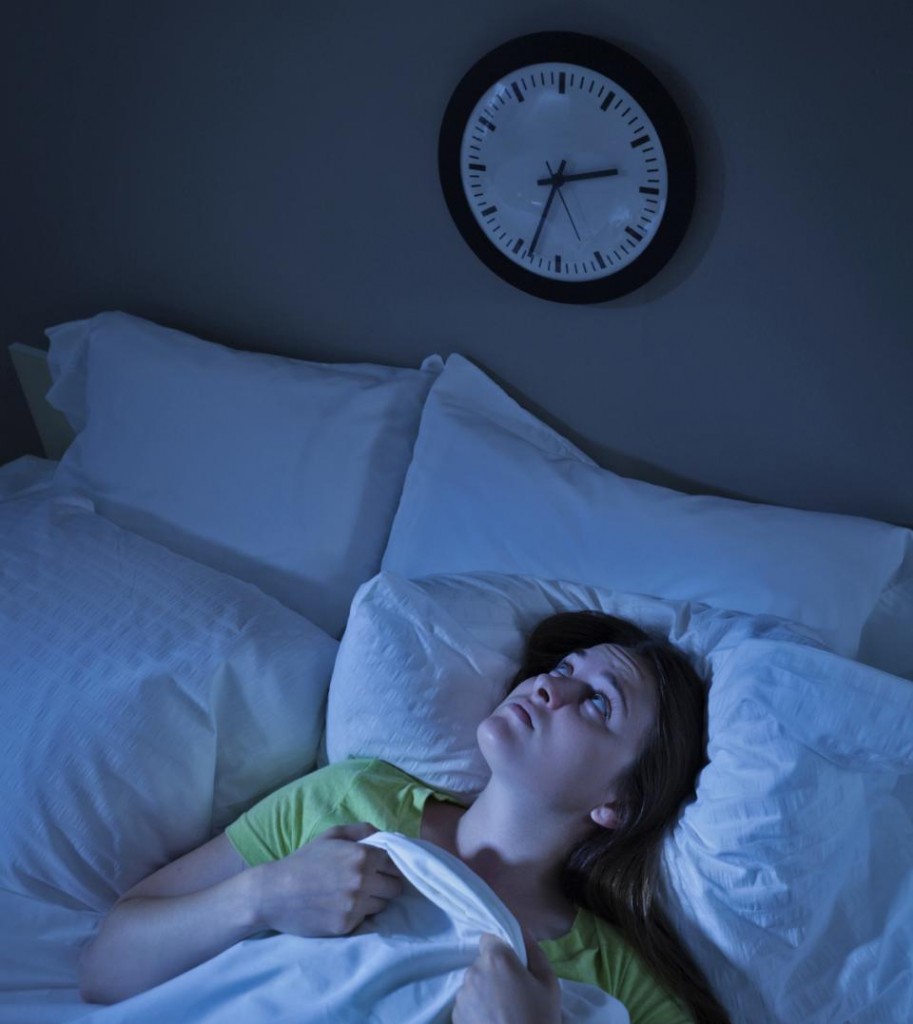
The phenomenon of waking up around 3 a.m., or even a little later, is a really common thing. Far from having a mystical or supernatural explanation, it is actually a very common type of problem related to sleep disturbances due to anxiety.
However, it is a phenomenon that deserves to be explained in detail in order to better understand it and, in turn, face it. Waking up at this time of the morning and not being able to fall asleep again is a very serious problem if it is repeated over many days. Hence the importance of knowing how to properly manage this situation.

Waking up around 3 or 4 a.m.: associated symptoms
There are many publications associated with this common phenomenon.
However, we must be clear that there is nothing strange about this, and that it is actually a reaction of our brain to a high state of anxiety that we can feel at a specific moment or, on the contrary, become a persistent sleep disturbance that we should start treating.
It is therefore important to take into account all the symptoms that usually accompany waking up between 3 and 4 in the morning:
- The moment the person wakes up at this time of the year, they feel great restlessness and uneasiness.
- Tachycardia and a sense of threat appear.
- When we want to go back to sleep, it is impossible for us. This increases our nervousness, negative thoughts, and the inability to sleep.
- If we fall asleep, it will be very light, which will make us wake up tired.
- This phenomenon, waking up around 3 a.m., can be repeated about twice a week.
Anxiety and the phenomenon of waking up during the early morning
Why do I almost always wake up around 3 a.m.?
If throughout the week you start to notice that you wake up unexpectedly in the early hours of the morning and almost always during these hours, ask yourself first if you are worried about something, if you feel threatened by a problem, if your job demands too much from you or if you currently have an emotional problem.
All these factors generate anxiety that we are not always aware of, and one way in which our brain reacts to this problem is through a night’s rest. We begin to have trouble falling asleep and, when we do, the tension generated and accumulated causes us to wake up suddenly and with a feeling of threat.
Let’s take a closer look:
- Anxiety directly alters our central nervous system (CNS), which begins to make small changes in its biochemistry and in the neurochemical systems involved in the wake-sleep cycles. All this will directly alter the sleep phases (non-REM and REM).
- Generally, and in these cases, when we go to bed, it is difficult for us to fall asleep, so we end up falling asleep around midnight. Anxiety will make our sleep fragmented and make it very difficult for us to reach the REM phase, where sleep is deep and restful. In turn, in our brain, this anxiety is interpreted as a threat, as something from which we must escape. The feeling of alertness causes us to wake up violently a few hours after falling asleep, that is, around 3 in the morning.
- It is a natural reaction of our body to a state of anxiety, where our neurotransmitters are altered, causing changes in our sleep.
How can I deal with this problem?
We are dealing with a sleep disturbance caused by anxiety. In order to fall asleep restfully, it is necessary that, first of all, we face these sources of stress, that problem that is generating anxiety.
- It’s important that you recognize that something is happening. Waking up in the early morning feeling scared or threatened is a direct sign that something is not right. Ask yourself why, what is it in your life that makes you uncomfortable, that makes you unhappy, or that inspires a sense of threat.
- Make small changes in your life, set priorities and, in turn, vary some habits so that your brain finds new stimuli and vents tension.
- It would be very convenient if, after dinner, you take a relaxing walk of at least half an hour. He walks, breathes deeply, relativizes things. Relax.
- When you get home, take a relaxing bath and go to bed with peace of mind. The last thing you should do is think about “I have to sleep well all night so that tomorrow I can perform properly”. This thought generates stress in your brain because it understands it as a pressure, as an obligation: “I have to sleep”.
- The best thing is to empty your mind and not think about anything. You can take a book to bed and focus on the story, nothing else.
- Make sure that the room is cool and well ventilated and that it also smells good. According to experts, the most suitable temperature for a good night’s sleep is 20 ºC. The moment we exceed 25 ºC, our body no longer feels comfortable. Remember!
Source: Better with Health