What is it?
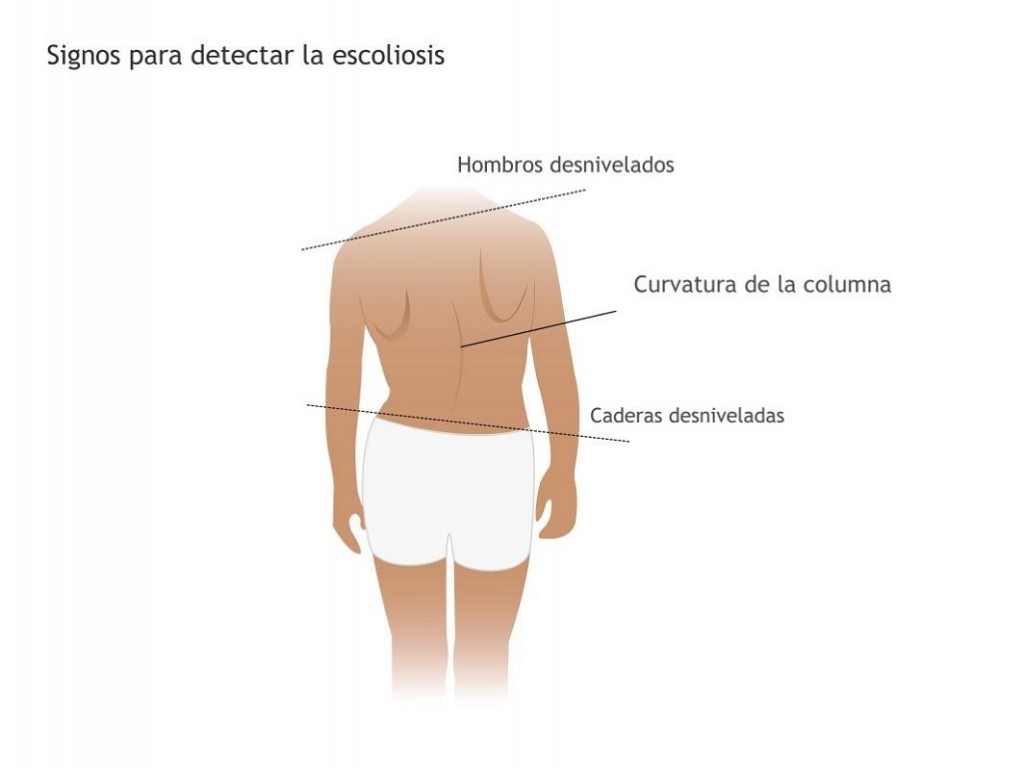
The spine is made up of cervical, dorsal, lumbar vertebrae and the sacrum, these vertebrae, depending on each area, have a certain curvature. Well, scoliosis is an abnormal curvature of the spine, we can see how the spine curves to one side in the dorsal or lumbar area, being able to see the shape of the spine with an “S” or “C” shape.
Types of Scoliosis and Causes
There are several types of scoliosis depending on the origin of this pathology. We can have scoliosis in which we know what its origin is and others that are not known with certainty. The latter are called idiopathic scoliosis, in this type of scoliosis it is not known exactly what its origin is, but it is known that genetic factors influence it.
This type of scoliosis is the most common. In the others, which if we know the origin, may be due to neurological or muscular diseases, congenital malformations (they occur in the baby during pregnancy)…
Symptoms
On many occasions the patient does not present major symptoms, but in most cases patients with this pathology present:
- Back pain
- Abnormal curvature in the back
- Hip higher than another, so it can affect the entire leg and spine.
- One shoulder higher than the other, which can also create pathology at that level.
Diagnosis
The diagnosis of scoliosis can be made with an inspection of the patient’s back, in which we can ask for a flexion of the spine (that touches the ground with the hands) to make this curvature more evident, we can see the difference in height in the pelvis, shoulders… To complete the analysis, we can perform complementary tests such as X-rays or MRIs.
Treatment
The treatment of this alteration will depend on the cause of the scoliosis, its location, the degrees of this curve and the age of the patient. The younger you start treating this pathology, the better results will be obtained.
- Manual techniques, such as massage therapy , neuromuscular techniques, facials, trigger points…
- Osteopathy, to rebalance the spine and help manual techniques to be more effective.
- Podiatry, to improve the difference in height of the hips and therefore, to reduce the degrees of scoliosis.
- Electrotherapy: ultrasound, TENS, microwaves…
- Daily stretching and exercise.
- Pilates, to improve posture. We can even reduce the postural degrees of scoliosis.
- Surgery, in the event that the curvature is already extreme or the patient reports many symptoms. This surgery consists of reducing the curvature of the patient.
Source: Fisiolution